Baitcasting
What is baitcasting
Baitcasting is a branch of spinning fishing that uses a baitcast reel. Unlike a spinning reel, a baitcaster provides direct contact with the lure, greater power reserves, and more precise cast placement. The technique is popular when targeting large predators in situations requiring long or accurate casts — around snags, along reed lines, or under overhanging trees.
When and where it is used
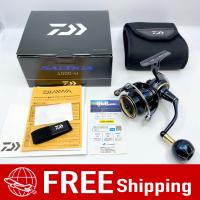
Baitcasting is used on rivers, lakes, and coastal saltwater. It is especially valued when fishing for pike, zander, perch, and bass — where control over heavy lures or fishing close to cover is needed. High-capacity baitcast reels are deployed for shore casting and targeting large saltwater predators.
Core mechanics
The baitcast reel sits on top of the rod. During the cast, the thumb controls the spool to prevent backlash. During the retrieve, the reel transmits lure vibration directly through the line to the hand. Casting rods are stiffer, with a handle designed for baitcasters (pistol grip or straight). Test ranges vary widely from 7 g to 100+ g.
Tips
- Set the spool brake so the lure descends slowly — protection against backlash.
- Start with heavier lures — they are easier to control when learning.
- A baitcaster requires casting technique: practice the pendulum cast and pitching.
- A magnetic brake is for beginners; a centrifugal brake allows fine-tuning for different conditions.
- Clean the reel once a season: bearings need servicing more often than on a spinning reel.
Recommended gear
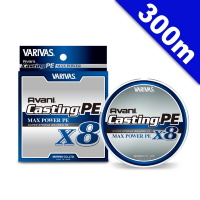
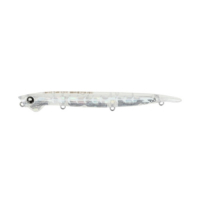
Casting rods with small-diameter line guides, test 10–60 g, length 1.8–2.4 m. Low-profile or round baitcast reels, gear ratio 6:1–8:1. Braided line PE 1.0–3.0. Lures: jigs, jerkbaits, large crankbaits, rattlebaits.