Eging
What is eging
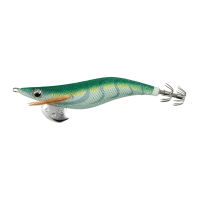
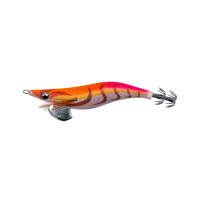
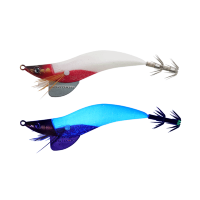
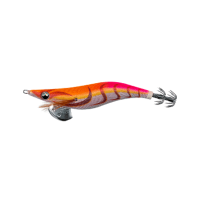
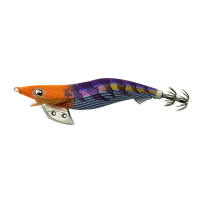
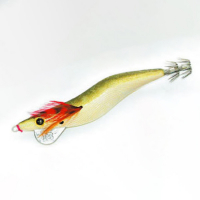
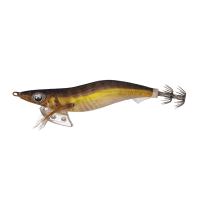
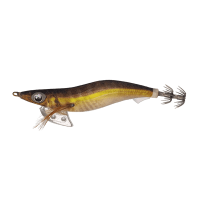
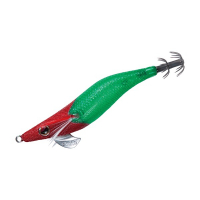
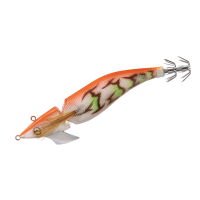
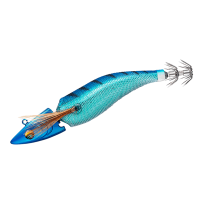
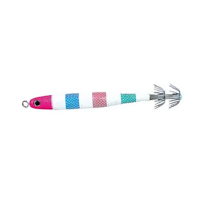
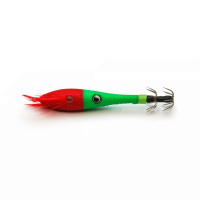
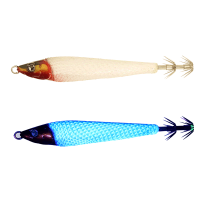
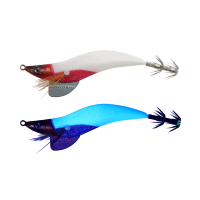
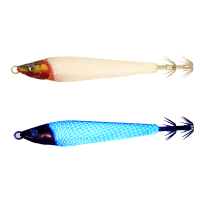
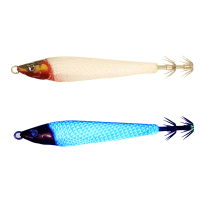
Eging is a Japanese technique for catching squid and cuttlefish on an artificial lure called an "egi." An egi is a brightly coloured lure shaped like a shrimp or small fish with a row of small prong hooks along the underside. The squid attacks the egi, wraps it with its tentacles, and is hooked on the prongs. The technique originated in Japan and South Korea and is now popular worldwide.
When and where it is used
Eging is done from shore, piers, or boats in marine waters. The best time is night and twilight, when squid rise toward the surface. Clear water, rocky or mixed bottom, and seaweed are preferred holding areas. Seasonality depends on the region: autumn and spring are typically the most productive periods.
Core mechanics
The egi is cast, then allowed to sink to the target depth. A series of sharp rod-tip strokes ("shakuri") lifts the lure, imitating a startled shrimp. On the pause the egi glides downward — this is when the squid attacks. The keys to success are correct presentation depth and jerk rhythm.
Tips
- Natural tones (shrimp patterns) in daylight; bright, fluorescent colours at night.
- Watch line tension on the fall — the strike often happens then.
- Presentation depth is critical: start near the surface and work deeper until contact.
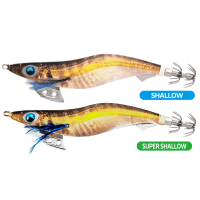
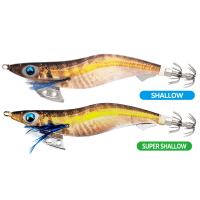
- Slow-sinking egi for shallow water, fast-sinking for depth.
- After a take, do not snap the rod — the hooks are already set; reel in smoothly.
Recommended gear
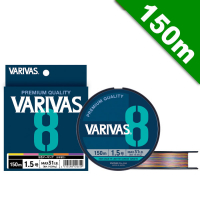
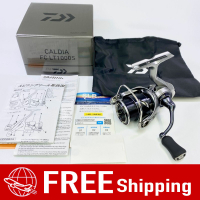
Eging rods (dedicated), length 2.4–2.8 m, test 10–25 g or rated for egi sizes #2–#3.5. Reels 2500–3000. Braided line PE 0.6–1.0, fluorocarbon leader 0.3–0.4 mm. Egi sizes #2–#3.5 in various colours and sink rates.